
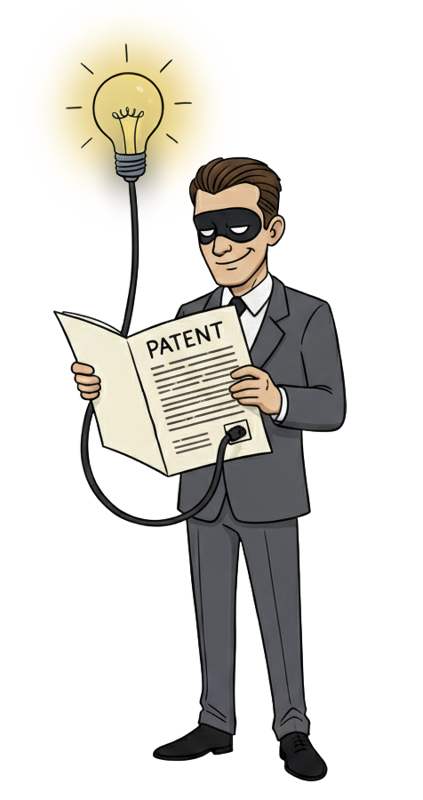
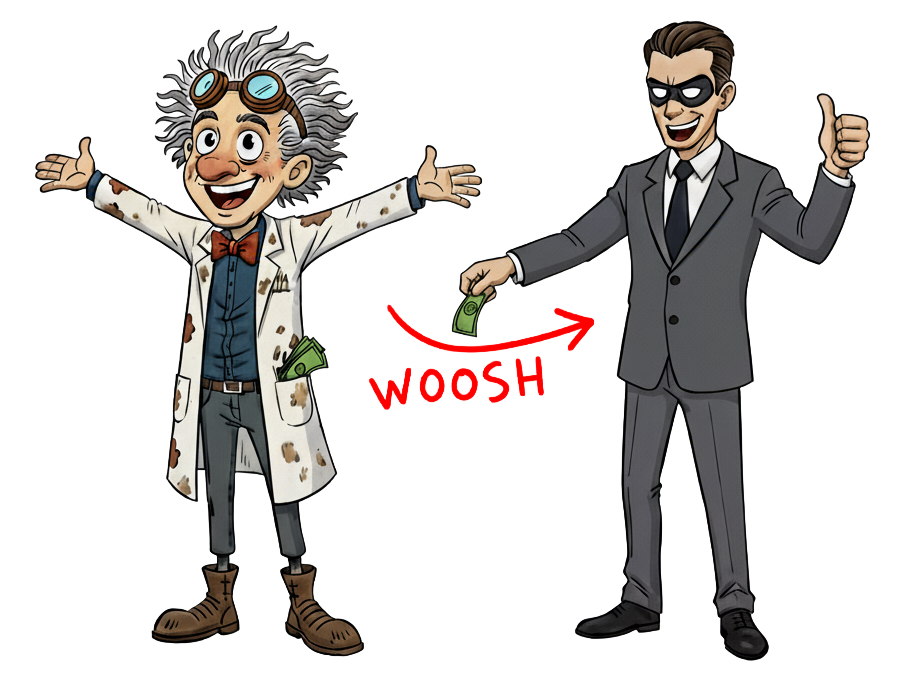
The backstory · in nine panels
My patent was copied (literally)‡ and the USPTO handed them a patent anyway
‡ The USPTO even told me it was inappropriate to point out the copying. (Hopefully you’re as shocked as I was.) ↩
-
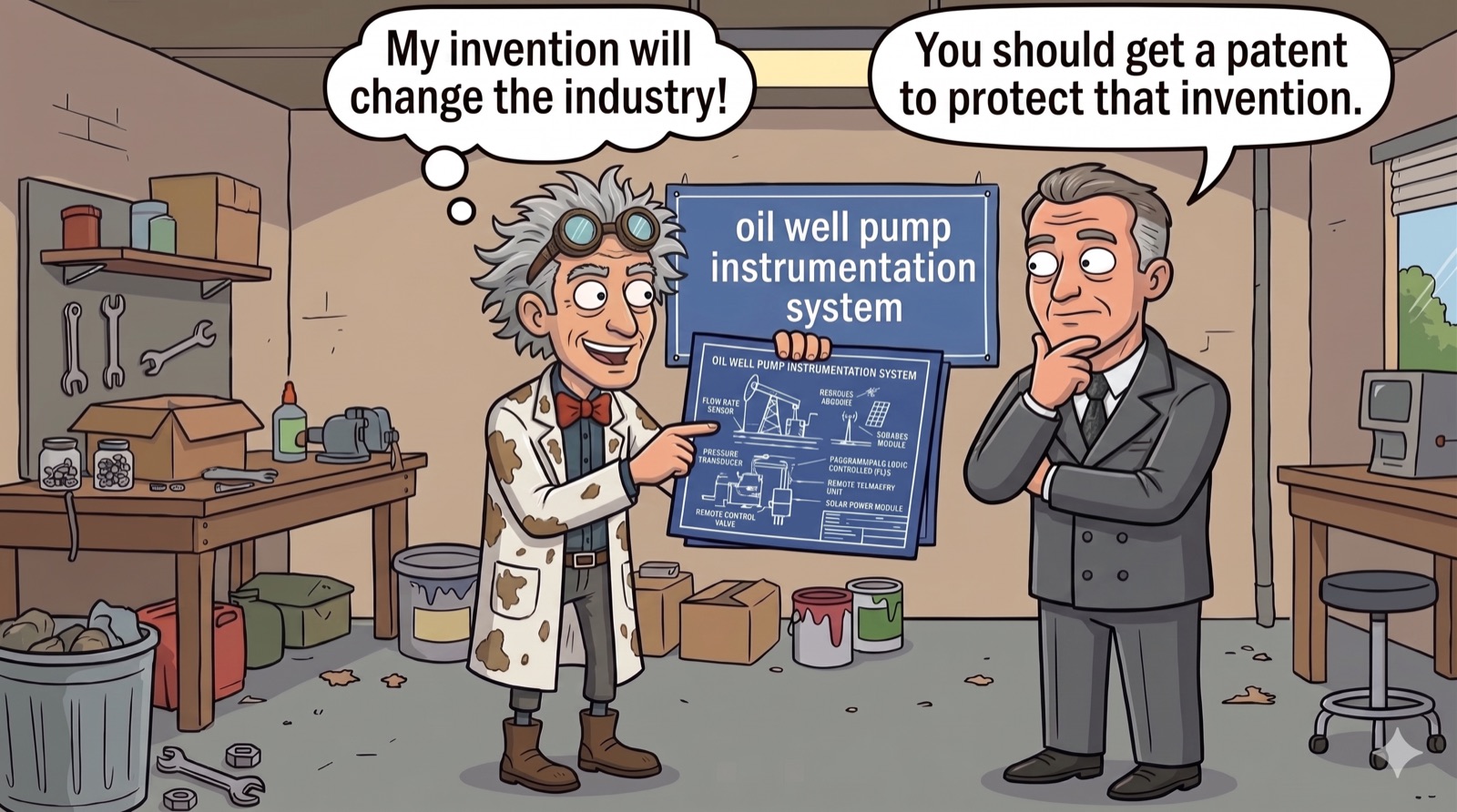 01
01The idea
I’ve had a lot of good ideas (and many more bad ones). I’ve thought about patenting some of them, but I generally just gave them away. This one was different. It was a completely novel way of determining something that’s otherwise pretty hard to observe. This was something worth protecting.†† So I did the responsible thing. (Foreshadowing: the responsible thing is a trap.)
†† Anything worth protecting is worth stealing, I suppose. ↩
-
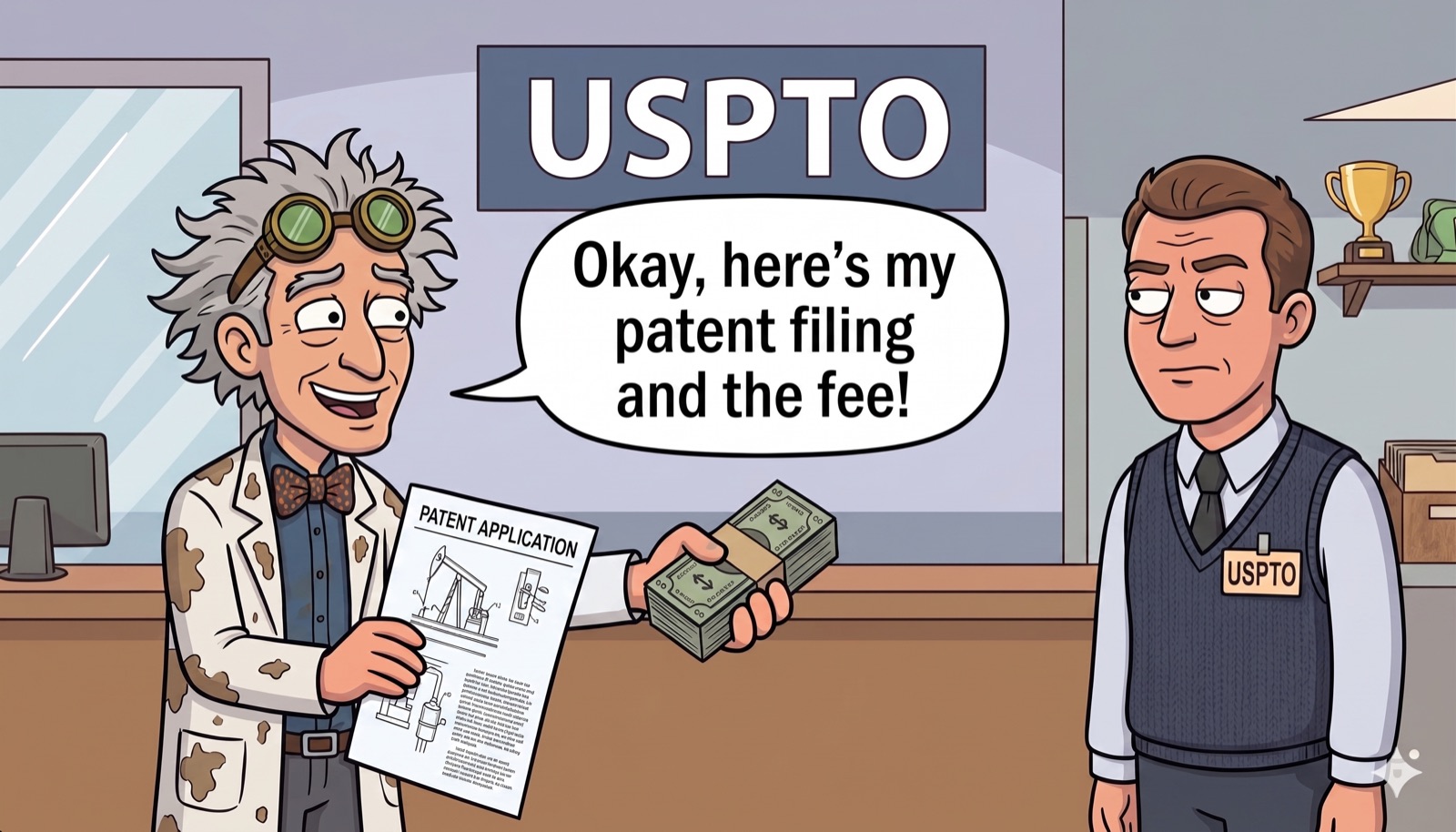 02
02I drafted and filed the application
I’m the inventor, and I drafted a very detailed application. I thoroughly disclosed the invention — which, as it turns out, was my big mistake. Apparently you can get a patent on an embarrassingly thin disclosure, if you’re lucky enough to get a careless examiner. I could have held back the very details that made it a strong disclosure.
-
 03
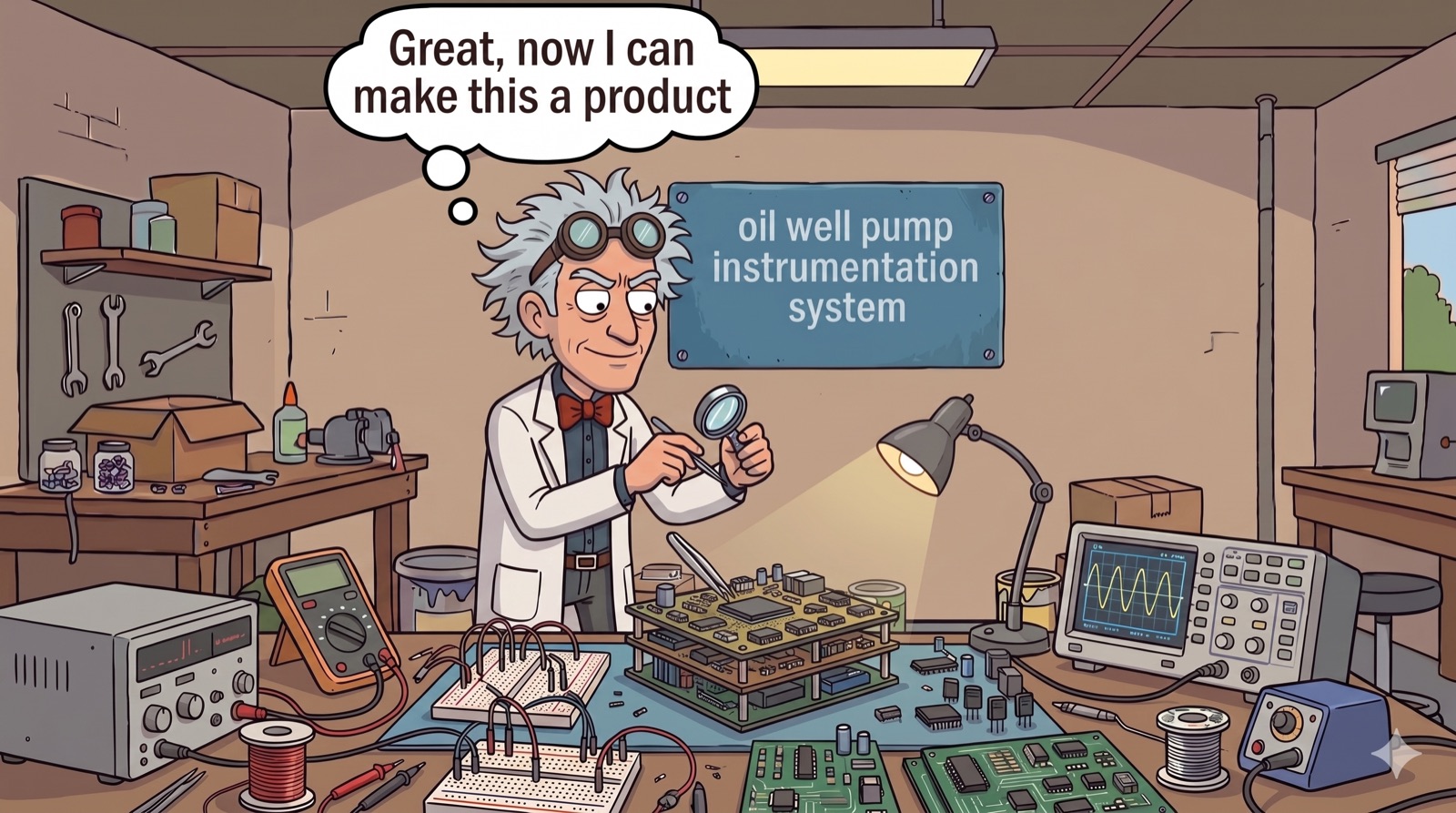
03I built the thing
Patent pending, I went and did the other responsible thing: I turned the idea into an actual product. Soldering iron, oscilloscope, the works. I also started talking to folks about it, looking for investment and trials. I should have been protected, right? Turns out the joke’s on me… more than once.
-
 04
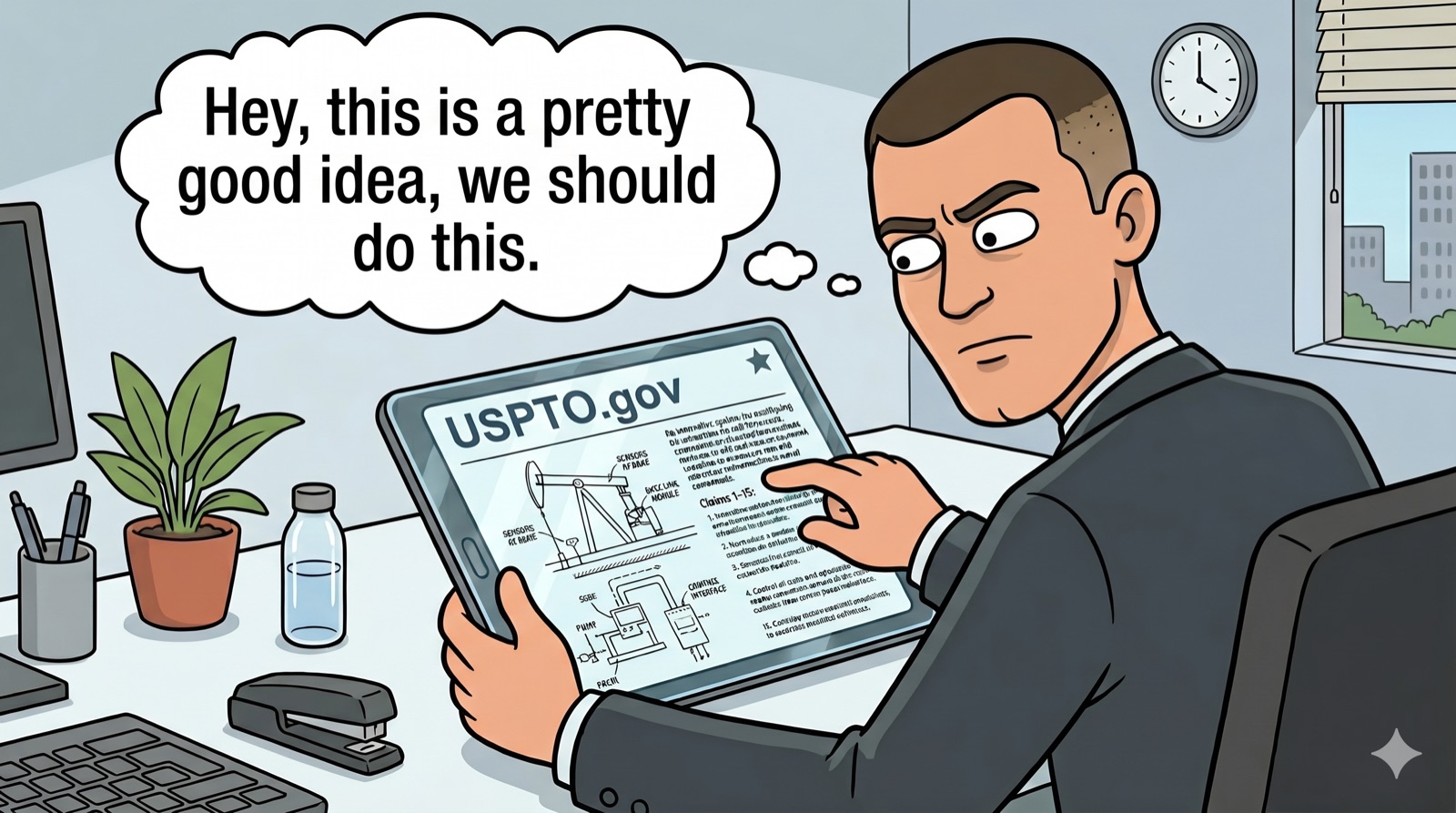
04Someone was reading
Here’s the purpose of the patent system: to get constitutional protection, you publish exactly how it works so anyone can make it. In exchange, you get a time-windowed monopoly (in theory). The flip side is that fancy lawyers can read it and figure out precisely how to get around it (or just copy it outright). Someone at Big Corp found my filing on USPTO.gov and had a wonderful idea — my idea.
-
 05
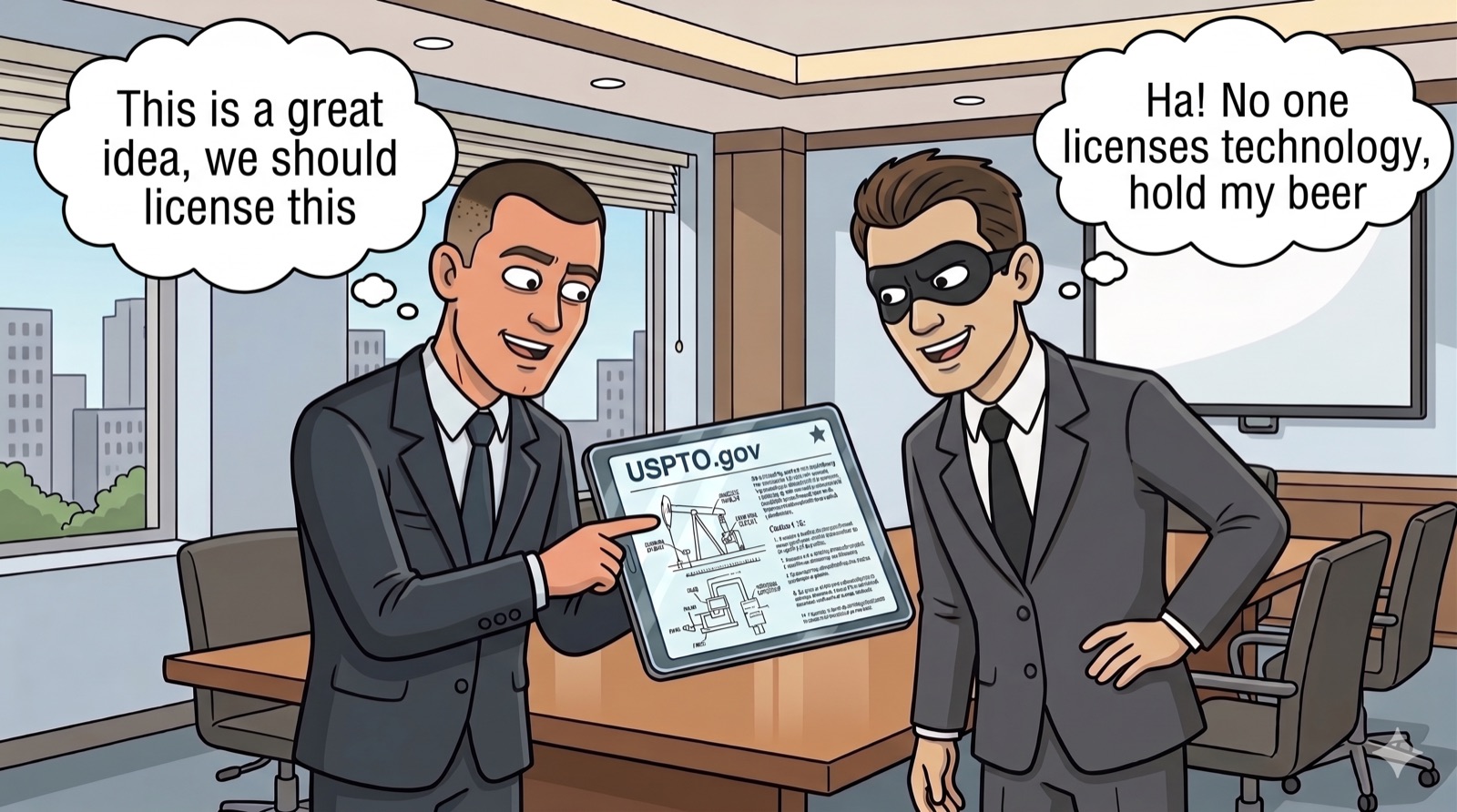
05'Hold my beer'
The right thing to do would be to license the technology. But that’s not how Intellectual Property in America works these days. In this case, rather than license my idea, they decided to hedge and file their own application. Why license when you can copy — and then use that copy as a reason not to license? It’s so despicably brilliant that all the Big Corps are doing it.
-
 06
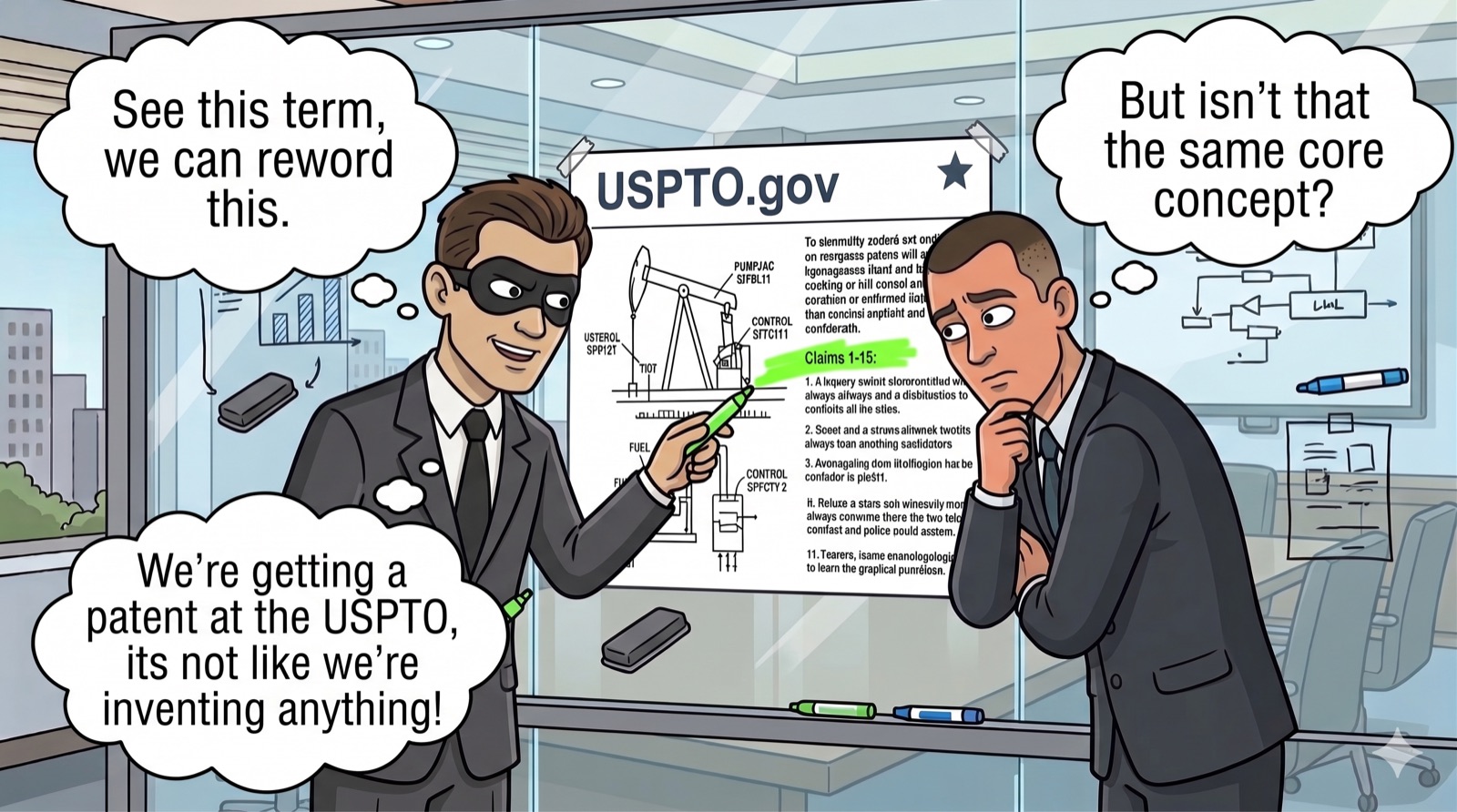
06Just reword it
The plan was elegant: take the claims, swap a few words, and file. Now, when this stooge of an inventor (i.e., me) approaches us for a fair license, we can tell him to take a hike — we already have our own IP. Who cares if it’s a ripoff? It’s official.
-
 07
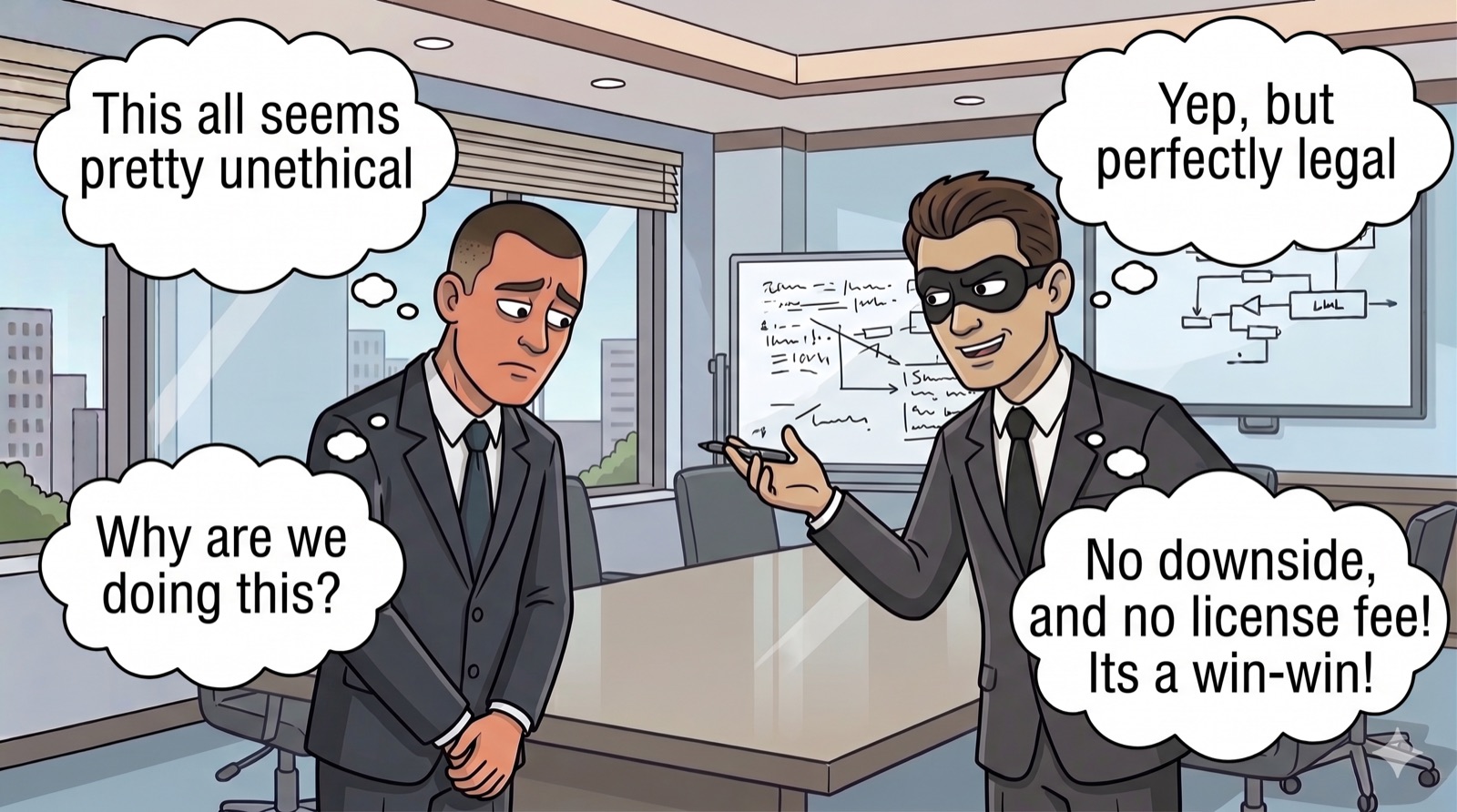
07Unethical ≠ illegal
Perhaps somebody in the room noticed this was unethical. The likely answer was the most American sentence ever spoken: “Yep — but perfectly legal.”
-
 08
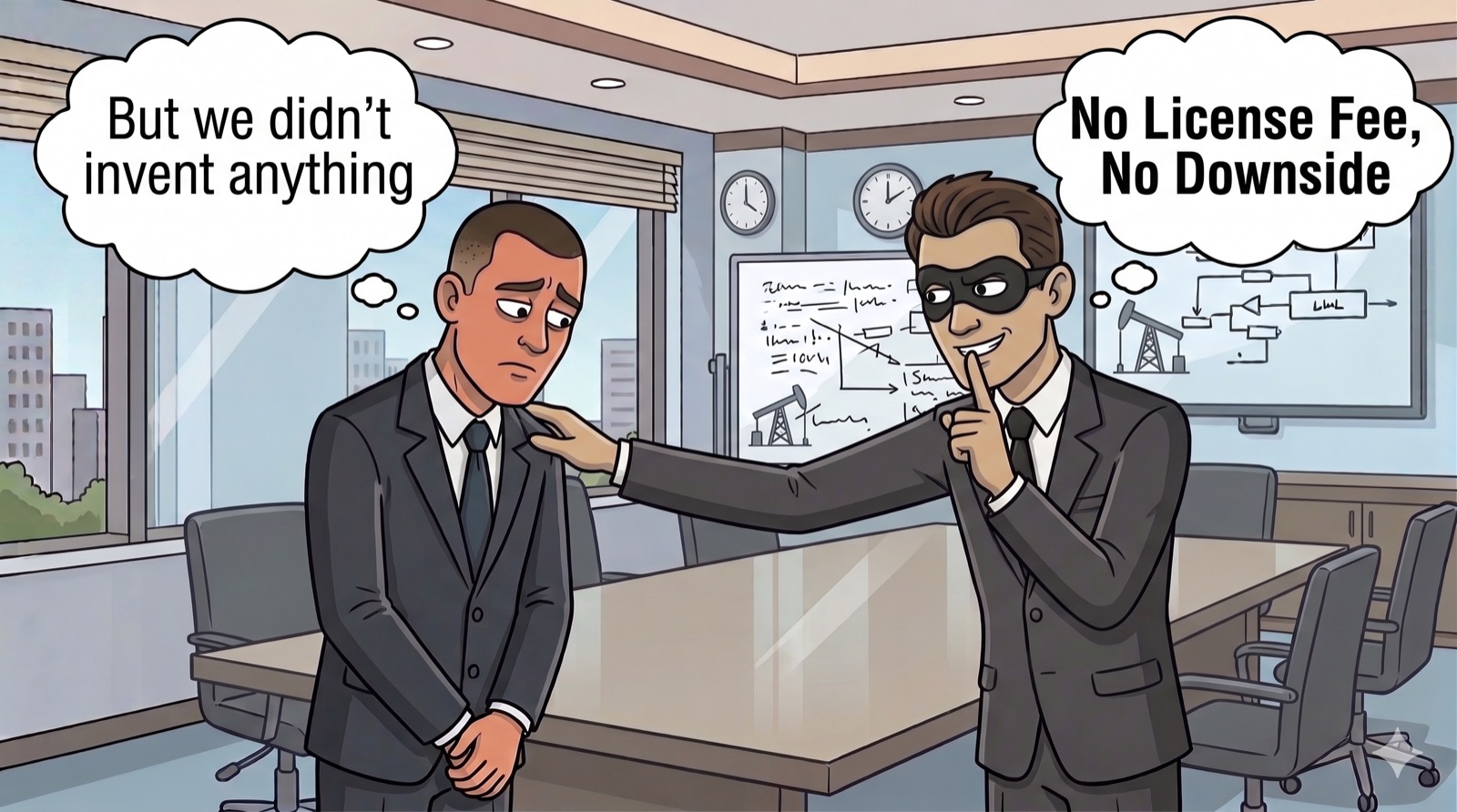
08No downside (for them)
No license fee. No downside. A win-win — for Big Corp… who cares if they didn’t invent anything.
I'm giving away the ending here,
but they got away with it too. -
 09
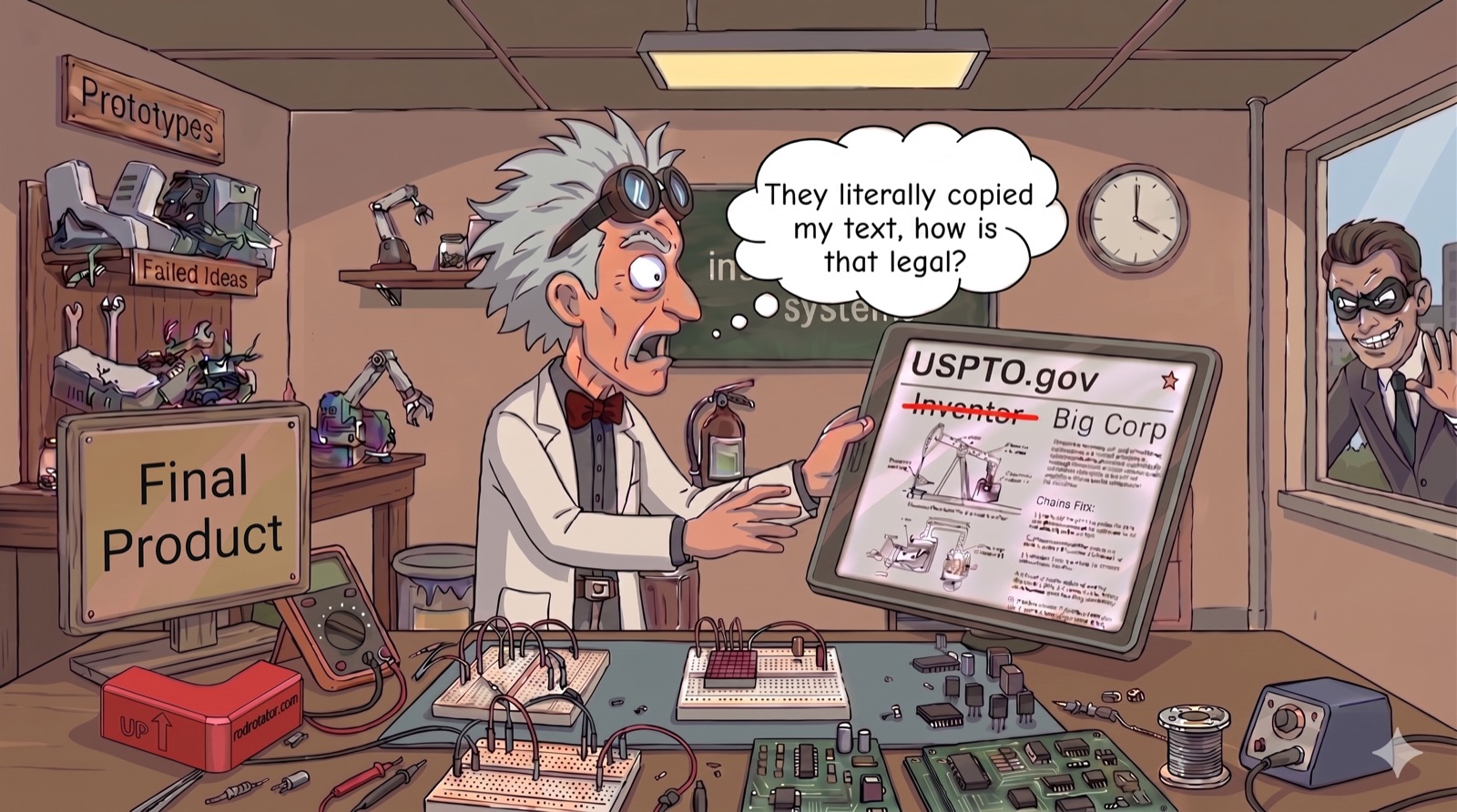
09How is that legal?
The official record now shows their name where mine should be. “They literally copied my text — how is that legal?” That question — and what I hope to do about it — is the entire reason this website exists.


But did they really copy my idea…?
I know every inventor thinks this because they don’t understand claim language. Just stick with me here. I can prove it.
Ask yourself: if they were willing to literally plagiarize text, what are the chances they actually invented anything? The whole point of the patent system is that others build on what came before. So yes, they very well could have added features or invented something novel, and the blatant and obvious text-copying could have been nothing but the work of a lazy attorney… but it’s not. It’s so much worse. Follow my journey, and I hope to prove it — to you, and to the USPTO.
That’s the “before.” The Post Grant Review is the “after” — my attempt to make the official record tell the truth.
Read the full story →


