
Dispatch No. 16 ← Previous ↰ All Next →
Claim 13 — Again

Not just incompetent examination — in my reading, the Claim 13 quotation in the applicant's remarks doesn't match the claim they actually amended.
Background — part of my pro se Post Grant Review series on U.S. Patent 12,460,537, which I believe copies rotation-sensing I disclosed first. Earlier I showed the Notice of Allowance praised a Claim 13 that doesn't say what the examiner said it does. This one argues that wasn't a stray typo — the applicant's own remarks misrepresented Claim 13. New here? Start at Dispatch No. 1.
Shenanigans!
I've scratched my head about this because it's so bonkers. At what point does a simple typo become something more devious? The fallout from this is substantial and disproportionate. I bear the cost, not the applicant who did this, not the examiner who didn't catch this. Me, the original inventor who had to watch as my IP was handed to someone else. I'm on the hook for everyone else's mistakes.
Like everything else in this story, there's no downside to the applicant. I don't think this was an innocent typo — though I can't prove intent, and I'm not claiming to read anyone's mind; all I can do is tell my side of the story.
Here's the first section of the applicant's RCE:
[Applicant RCE Remarks]
Claims 1 through 7Applicant respectfully asserts that claims 1 through 7 are not anticipated by Phillips under 35 U.S.C. § 102(a)(1) at least because Phillips does not describe each and every element of independent claim 1, as currently amended.
In particular, Phillips does not describe the sensor system of amended claim 13 including a processor subsystem…
What the actual F#@%? Claim 13 when discussing 1 through 7?
The text following this is the actual amended claim 1 text, so you're going to call this a simple clerical error, right? What's an extra "3"? That's trivially a typo, you'd say. But the examiner allowed claim 13 thinking:
[Notice of Allowance]
Claim 13, 16 and 19 include analogous, though not necessarily coextensive, features in conjunction with Claim 1, an [sic] is, therefore, along with its dependencies, for similar rationale as disclosed above, allowed.
Even though claim 13 was very different from 1, 16, and 19. Way different. Different planet different.
And notice the examiner's own escape hatch in that sentence: “not necessarily coextensive.” That hedge is the tell. You only write “not necessarily coextensive” when you haven't actually checked whether the later independent claims carry the same limitations — you're waving them through “by analogy” to claim 1 and trusting they line up. Here, claim 13 didn't line up at all.
All of this is in the Notice of Allowance.
How did this happen?
It all makes sense now.
It's right there on page 1 of the applicant's RCE response. Claim 13 surely must have the same text because it's "quoted" (as claim 13). Is this an innocent typo or a calculated misdirection? Given what I read as plagiarism and other misleading statements, I'm inclined to believe the latter (again, just my humble opinion, not fact).
Check my math. Here are the applicant arguments/remarks (RCE). Claims 1 through 7 are not claim 13, right?
Here's the text of the claim amendments (RCE) in that same response. I'll show you the real claim 13 below. Note: claim 13 is correct in the amended claims… sort of.†† But if you're lazy and don't read the documents past the first page, you'd probably rely on "what looked like claim 13" on page 1.
†† It was amended to remove the vibration sensor, see below. ↩
Also, Claim 7 got reworded and that never got reviewed.
How did the examiner not catch any of this?
No safeguards — no review
I've said it all along, the examiner should have caught this on both:
- The merits
- The direction change argument was garbage and repeatedly taught in the prior art, and pointed to directly in my prior art submission, and was even repeatedly admitted by the examiner
- Starting and stopping on stroke boundaries is also garbage. I say practically that 20 times. A POSITA would agree. I'll come back to the technicalities of this in a future post
- On the basic proofreading of the allowed claims… but also the applicant remarks
- Claim 13 was missed - it completely lacked the stated allowance text
- Claim 7 got reworded - no review in the record
- Claim 1 added the vibration sensor without appropriate markup
- I'm sure there's more, heck, the examiner made technical errors too
In general, claim 1's (all applications, not just this one) get the most attention. Subsequent independent claims get less attention. That shouldn't happen, but we all know that's the case. This applicant was banking on that.
Pro tip: Always stick the broadest claim in after claim 1.
This is why I think it's dastardly. See the remarks in the Request for Continued Examination (RCE) that "quotes" (in quotes) claim 13. It's got a "1" in it and looks like the text of claim 1… if you just glance at it… which I think we've established is the M.O. here. That nuance is easy to miss. Heck, I missed it until I sat down to write this stupid blog and pick apart the documents. I didn't even find it. Claude did. Is this a psychological typo? Am I back in conspiracy town? Again, typos are perfectly legal… right?
But this only explains how it happened, not why (I think it was intentional, but that's just my opinion), or why the examiner didn't catch the end result — a simple critical proofreading pass would have uncovered that. The typo analysis here is super detailed. You don't need the typos to see the flaw — just read the real claim 13 against the examiner's reason for allowance (it's at the top of this page).
Considering all of this, why was this so hastily allowed?
Just an innocent mistake?
They touched the text of claim 13 in the amended claims. You'll all say one of these must be a simple typo. On page 1, they clearly meant to quote claim 1 in the remarks because that's the actual text. It's just coincidental that it makes claim 13 look like claim 1. But here's the kicker: they also broadened the actual claim 13 in the process. In other words, they made claim 13 appear to read similarly to claim 1 (page 1 of the remarks), but also removed text from the real claim 13 at the same time. Text that the examiner previously said was allowable. That raises some questions.
A vibration sensor
In that amended claim 13, they specifically deleted one of the examiner's stated reasons for allowance. The one about the vibration sensor in 3 axes (remember my figure 3 from Dispatch No. 9?)
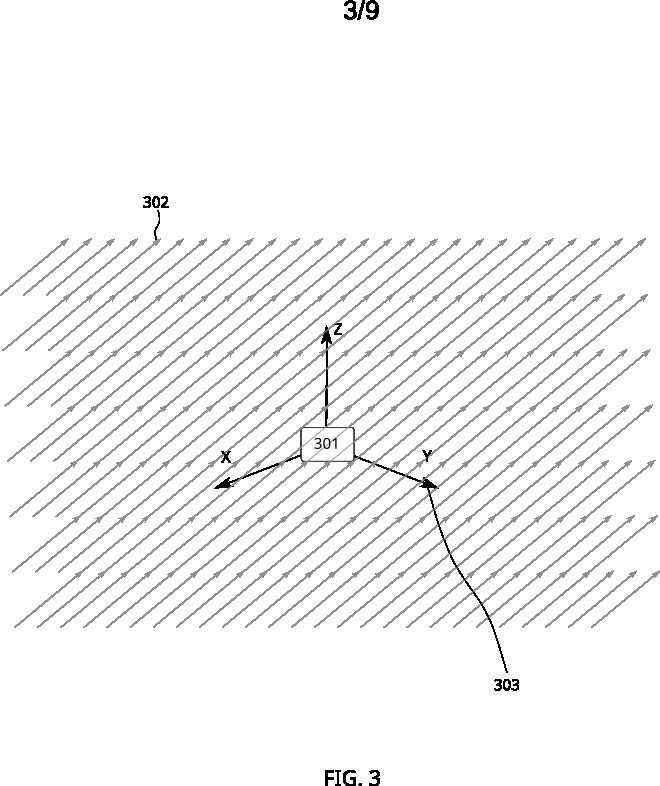
Here's the examiner's Notice of Allowance:
[Notice of Allowance]
Philips [sic] fails to teach a vibration sensor subsystem for monitoring vibration of the at least one component of the downhole pumping system in three axes;
Forget the fact that the examiner repeatedly missed my obvious Figure 3 (Figure 3… for a generic 3-axis sensor)‡. And that an accelerometer, by definition, measures/samples vibration. And that I call out "oscillations" in reference to the gyro (oscillations is a synonym for vibration). Forget all that. The examiner stated that a "vibration sensor" … "in three axes" was a contingent element for allowance. But it already had been removed in the very claimset the examiner was actively reviewing under the RCE. There's no excuse for not proofreading that. Both documents were in hand. Believe me when I say my third-party submission wasn't given a fair and thorough reading. The allowed claims weren't even given a half read.
‡ That's one of those intentional nuances that make this even more disappointing. I'm bummed I didn't make this dispatch 13. ↩
The order is confusing here. The applicant removed the vibration sensor immediately before the examiner said that if they incorporated the vibration sensor, it would be allowable 🤯! There's nothing wrong with that. Nothing wrong with throwing it against the wall to see if it sticks. But the examiner had to have at least seen this much. It was an amended claim.
Remember, the examiner had used this flawed vibration sensor logic repeatedly in the previous office actions, so the applicant knew this was an important element to include. Who said "Never interrupt your enemy while he's making a mistake"? I'm not saying the examiner was the applicant's enemy exactly — quite the contrary — but the applicant sure didn't point out this mistake. They went even further by pulling that specific text out of claim 13. That was bold. I wouldn't have thought it would work. I would have been wrong.
Should they have fixed it?
I sure think so, especially since you can very clearly trace the allowance of claim 13 to that typo on page 1 of the applicant arguments/remarks (RCE), and the vibration sensor being slipped into claim 1 without the appropriate markup. Forget about the legalities… the right and honorable thing to do would be to fix it.

Analogy time: Say someone erroneously deposited a million dollars in your bank account — would you say anything? What's the harm in just letting it sit there… Someone else made that mistake, right? Now, what if you had a hand in erroneously making that deposit? Say you put the decimal point in the wrong place. Who's responsible then? I know all these analogies are slightly off, but this is a good one. You might just let the $1,000,000 sit there and play dumb… hope no one notices. I'm not sure if that silence is technically legal, but let's just say it is. No downside, right? But what if that money came out of someone else's account… and what if the bank told that guy (whose account got drained) "we need $60k to check our math and see if we screwed up". That sucks. Especially since that guy had his account drained and has no money (obviously this is all a hypothetical and has no parallel with the whole patent story).
A direct, traceable line
The material error, the typo, directly led to an allowance based on claim text that, in my opinion, was misrepresented. Once the applicant got the allowance, they certainly would have realized "oh, we hit the jackpot — we got this crazy extra-broad claim and the examiner didn't catch it". Should they have done the right thing and fixed it? Again, to the running theme of "no downside," what's the harm in letting it slide through?
Once a patent is granted, it costs an arm and a leg to claw it back, and they aren't on the hook for it. Remember, I believe the whole point of this was to stifle my ability to get a fair license from that same company (again, my opinion). The claims don't matter in that context. A wildly broad claim is just icing on the cake. Any rotation sensing patent involving a magnetometer, gyro, etc. would have been enough to muddy the waters. I can't say "they don't have a patent on that" anymore. There is confusion in the market. That harms me, but helps them. Again, no downside.
Either way, it falls on me financially to fix this. I have to pay for their mistakes and questionable ethics.
Full Claim 13 text (as amended)
[Their amended claims]
13. (Currently Amended) A sensor system for a downhole pumping system, comprising:a sensor subsystem for detecting movement of at least one component of the downhole pumping system, the sensor subsystem comprising:
an axial motion sensor subsystem comprising an axial motion sensor, the axial motion sensor to be coupled to the at least one component of the downhole pumping system and to measure axial movement of the at least one component of the downhole pumping system based on variations detected by the axial motion sensor generated by movement of the at least one component of the downhole pumping system; and
a rotation sensor subsystem comprising a rotational sensor, the rotational sensor to be coupled to the at least one component of the downhole pumping system and to detect rotational movement of the at least one component of the downhole pumping system by sampling rotational
velocityvalues with the rotational sensor generated by rotation of the at least one component of the downhole pumping system; and👉👉👉
a vibration sensor subsystem for monitoring vibration of the at least one component of the downhole pumping system in three axes; and👈👈👈a processor subsystem to receive data from the axial motion sensor subsystem and the rotation sensor subsystem, the processor subsystem to:
derive a vibrational baseline of the at least one component of the downhole pumping system from the vibration sensor subsystem in three axes during normal operation;verify the axial movement of the at least one component of the downhole pumping system with the axial motion sensor subsystem; [[and]]
when the axial movement has been verified,
determine rotational velocity of the at least one component of the downhole pumping system withdetecting the rotationalvelocityvaluesdetected bywith the rotation sensor subsystem during a current stroke of the downhole pumping system; andcomparing the rotational values with previously sensed rotational values detected by the rotation sensor subsystem during a previous stroke of the downhole pumping system to determine if rotation of the at least one component of the downhole pumping system has occurred.
See how they deleted the vibration sensor bit, broadening this claim.
Why this is worse than a mistake
I don't think any of this was a simple mistake. You can argue the contrary, but it's right there in the public documents. They amended claim 13 to remove an element the examiner previously held allowable — the vibration sensor (and in my opinion, that was done improperly on both ends). Then came what I read as a misrepresentation of that amendment (by number) in the argument, making it appear to have the elements the examiner would subsequently find allowable.
Here's where it lands in legal terms. Of everything on this site, this is the closest thing to textbook inequitable conduct — a breach of the duty of candor (37 CFR § 1.56) serious enough, in principle, to render a patent unenforceable. That doctrine (Therasense) demands two things: materiality and a specific intent to deceive. The materiality here is about as clean as it gets — you can trace a straight line from the mislabeled “claim 13” on page 1 to the allowance, so but-for that slip, this claim very plausibly never issues. The catch is the second element: intent lives inside someone's head, and I genuinely can't prove it. So I'll say only what I can stand behind — the materiality is there, the pattern is ugly, and the intent I can merely suspect. That's not me softening; it's me being precise about which half I can prove (the same calibration I laid out back in Dispatch No. 12). And the same boundary applies here, doubly so: inequitable conduct isn't something I can even raise in the PGR. The Board won't rule on unenforceability — that's a court question — so this Claim 13 story is context for how the bad claim slipped through, not a ground the petition stands on.
If all of this was truly a simple mistake, it had dire consequences, resulting in the allowance of claim 13. What would be the downside? "Oops, it's a mistake (but someone else will have to pay to get it fixed… not us, who made the mistake)". It's truly shocking how much harm can befall an innocent party (me, the original inventor) for the negligence of others.
The examiner's stated reasons for allowance were crystal clear (completely wrong in my opinion) — claim 13, as written, plainly didn't meet them. But if you get an unpatentable claim, who pays for fixing that? An issued claim rides on a statutory presumption of validity — it's treated as valid until someone else pays a bunch of money to prove otherwise, which is exactly what my PGR sets out to do. In the meantime there's no downside to the applicant for walking away with a claim broader than the allowance can support: the system effectively lets them bank the over-broad claim and dare anyone to challenge it. It's effectively "oops, we got a broader claim than we should have… ❝we didn't even realize❞ that's what happened… uh? sorry… I guess?"
Relevant documents:
- Full file wrapper
- Applicant Arguments (from the RCE)
- Amended Claims (from the RCE)
- Notice of Allowance
† When I first generated this image, I thought it was a bit over the top. Now I think this is exactly how it happened. ↩
Related dispatches
- Dispatch No. 6 — The Third-Party Preissuance Submission — my third-party submission, including the figure they kept missing.
- Dispatch No. 8 — Back From the Dead — how this application sprang back to life.
- Dispatch No. 9 — The Overly Broad Claim Slipped Through — how claim 13 doesn't track with the examiner's reason for allowance.
- Dispatch No. 11 — Suspicious Allowance Timing — the suspicious timing of that allowance.
- Dispatch No. 12 — A Private Conversation, Held in Public — digging through the office actions, I found exactly how this happened.
- Dispatch No. 14 — My Apology to Good Examiners — my apology to the good examiners, and what this applicant did.
- Dispatch No. 17 — Let's Ask Claude — I put the whole thing to Claude.
- Dispatch No. 20 — New material, not in the disclosure — the undisclosed "previous stroke" material this broadened Claim 13 introduced.
- Dispatch No. 29 — Independence Day — the Independence Day coda, revisiting this claim-13 mess as part of the error-ridden examination.
Discussion